
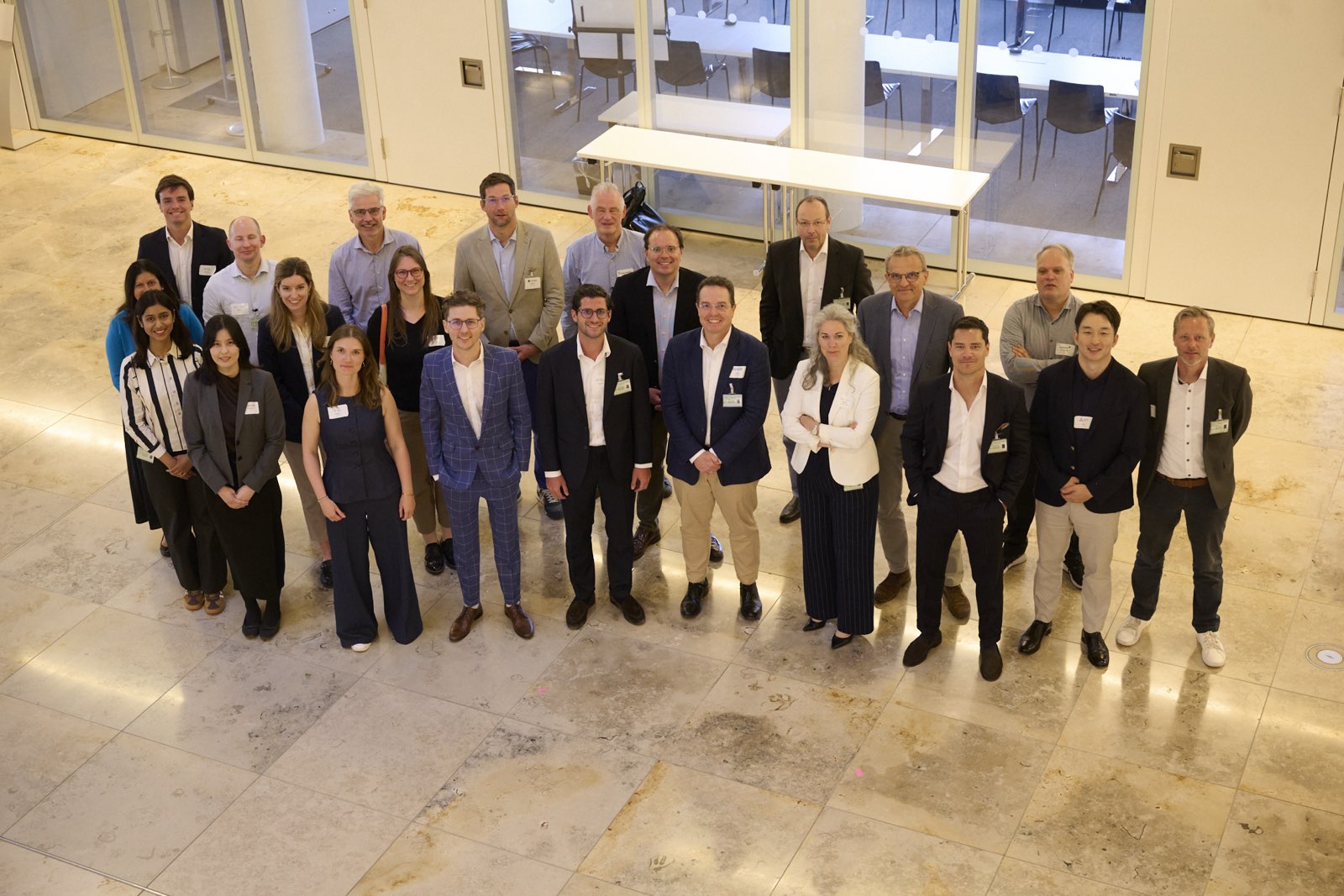
The chemical industry is part of the solution to many of the challenges facing society today. Innovation, research, products and solutions are the building blocks that enable us to tackle future challenges and improve people's lives every day. And just as constructing a building requires more than architects alone, bringing together engineers, site managers and construction workers, the chemical industry also relies on cooperation between companies, sectors, employees and governments. This collaboration is a powerful lever for finding solutions to the complex challenges we face.
These challenges are well known. Many of us address them in our day-to-day work. Reducing greenhouse gas emissions, promoting circularity, building more durable value chains and supplying products with a lower environmental footprint are all urgent priorities. Yet no single company can deliver definitive solutions to these challenges on its own.
It was with collaboration in mind that the Global Impact Coalition (GIC) was established. This coalition of companies from the chemical industry and related value chains is dedicated to addressing some of the most pressing sustainability challenges facing society — challenges that require industry-wide agreement and coordinated action. Bringing together some of the industry's leading players, it works to accelerate practical solutions capable of driving systemic change across the sector and providing society with answers to today's challenges.
Sustainability through collaboration
GIC brings together companies that often compete in the marketplace but share a common responsibility to find solutions to environmental challenges. Through working groups and joint initiatives, its members address issues ranging from circularity and raw materials to emissions reduction.
The goal is to drive tangible action and practical solutions that reduce the industry's environmental impact. Rather than replacing the individual efforts of its members, GIC complements them by providing a platform where companies can tackle barriers that extend beyond the boundaries of their own organisations.
According to Charlie Tan, CEO of GIC, the coalition "was created in response to the urgent need to address the climate impact of the sector, which currently accounts for around 6% of global emissions. Its aim is to promote tangible projects and R&D collaborations to accelerate the transition towards net-zero carbon emissions and foster cross-sector innovation."
Business collaboration has long been a proven way of overcoming complex, large-scale challenges. One example dates to the mid-1990s, when companies such as Sony, Philips, Toshiba, Panasonic and Time Warner, among others, set aside their differences to work together on developing a single high-density optical disc format. The result was the DVD: a technological breakthrough that defined an era.
Moeve: driving change through collaboration
For Moeve, membership of GIC reinforces the company's conviction that cooperation is essential to transforming the industrial sector and preparing it for a low-carbon future. By working alongside other industry players, customers and stakeholders, Moeve contributes its expertise in developing lower-carbon chemical solutions while also gaining insights, knowledge and best practices that can help accelerate progress across the industry.
This exchange is a two-way process that helps build a shared understanding of the challenges posed by the transition and the measures needed to address them. Collaboration is undoubtedly a key driver of progress towards a cleaner chemical industry.
Through its participation in GIC, Moeve helps build the partnerships and value chains needed to accelerate the adoption of low-carbon and circular chemical solutions.
"A company can reduce emissions from its own operations," says Maarten Wetselaar, CEO of Moeve. "However, many of the barriers to scaling up low-carbon solutions lie beyond the reach of any single organisation. Whether it is sustainable raw materials, certification systems or market adoption, progress depends on coordination across the entire value chain. That is why collaboration is essential."
Collaboration is deeply rooted in Moeve's philosophy. The company has maintained a technological partnership with Honeywell for more than 30 years to develop and continuously improve Detal technology, which enables the more efficient production of linear alkylbenzene (LAB). In November 2025, the two companies announced an extension of their strategic agreement to drive the production of renewable LAB, incorporate Moeve's NextLab-R technology into Honeywell's licensing portfolio and jointly develop new production processes.
Looking ahead
The transition towards a more sustainable chemical industry will require continuous innovation, investment and commitment. It will also depend on stronger collaboration across value chains, industries and regions.
For Moeve, participation in GIC demonstrates how collective action can help accelerate progress towards a lower-carbon and more circular future. This collaborative approach complements Moeve's Positive Motion strategy, which is driving the company's transformation into a leading player in green energy and chemical solutions.
Alongside investments in renewable fuels, green hydrogen and environmentally conscious chemicals, collaboration remains central to driving long-term industrial transformation and building resilient, low-carbon value chains. It is a key that can unlock the door to a more renewable future.